
The Hardest Part of Business Messaging Isn’t Sending the Message. It’s Getting Permission.
Getting customers to opt in is becoming the hardest part of business messaging. The key is not simply reaching customers, but giving them a clear, compelling reason to say yes.

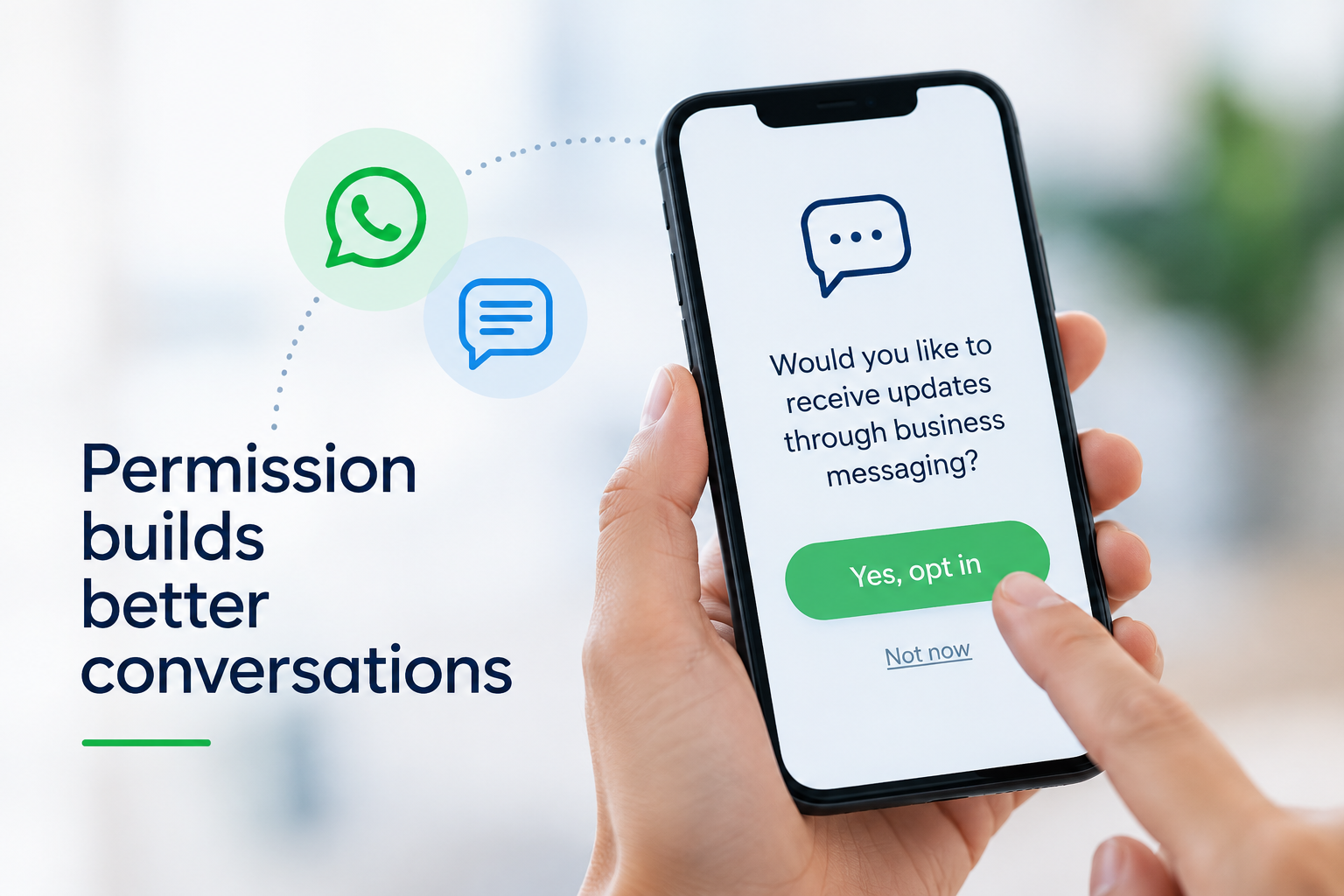
Business messaging has never been more sophisticated. Brands can now engage customers through channels such as WhatsApp Business messaging and RCS Business Messaging, creating richer, more immediate digital experiences.
But there is a fundamental challenge that technology alone cannot solve:
How do you get customers to give you permission to message them?
Reach is no longer the scarce resource. Permission is.
From Contact Details to Customer Permission
Having a customer’s phone number does not automatically mean having permission to communicate with them through messaging.
Successful business messaging starts by turning a contact detail into a meaningful relationship — one where the customer understands why they are being contacted, what they will receive, and what value it provides.
This changes the way businesses should think about opt-in.
It is not simply a compliance checkbox. It is the beginning of the customer relationship.
Opt-In Should Be a Customer Experience, Not a Checkbox
The best opt-in experiences are simple, relevant and transparent.
Instead of asking customers to accept generic communications, businesses should explain the specific value they will receive.
For example:
“Would you like to receive early access to our new offers by WhatsApp Business?”
is very different from:
“Would you like to receive marketing communications?”
The first gives the customer a clear reason to say yes. The second is vague and leaves the customer uncertain about what they are actually agreeing to receive.
A stronger version makes the value even more explicit:
“Would you like to hear from us when we launch a new offer that may interest you?”
The principle is simple: marketing opt-in should explain the type of marketing content customers can expect and why it may be relevant to them.
The Value Exchange Is the Key to Successful Messaging Opt-In
Customers are much more likely to opt in when there is an immediate and understandable benefit.
For marketing messaging, that benefit might include:
- Early access to new offers
- Exclusive promotions
- Relevant discounts
- Invitations to special events
- New product or service announcements
- Offers tailored to their interests
- Priority access to seasonal campaigns
- Updates about loyalty programme benefits
The more tangible and relevant the benefit, the more compelling the reason to subscribe.
For example, a travel company could ask:
“Would you like to hear about special offers and seasonal promotions for destinations you are interested in?”
A retailer might ask:
“Would you like to receive exclusive offers and early access to selected promotions?”
A transport operator could ask:
“Would you like to hear from us when we launch a new offer that may interest you?”
These are more effective than simply asking customers to agree to “marketing communications”.
The principle is simple: make the value of saying yes greater than the effort of opting in.
The Best Time to Ask Is the Moment of Maximum Relevance
Timing can make the difference between an ignored opt-in request and a successful one.
The best moment to ask is often when the customer has an immediate reason to be interested in a future offer or communication.
A passenger exploring destinations, a customer browsing a product catalogue, someone comparing travel options or a visitor engaging with a brand at an event may already be receptive to relevant commercial messages.
Offering marketing opt-in at that moment feels natural rather than intrusive — particularly when the message is connected to what the customer is currently considering.
For example:
“Planning another trip? Would you like to hear from us when we launch a new offer that may interest you?”
Or:
“Interested in future promotions? Sign up to receive selected offers and exclusive opportunities from us.”
The closer the opt-in is to a genuine customer interest, the stronger the value exchange.
QR Codes: A Bridge to Marketing Messaging Opt-In
QR codes are becoming an increasingly useful bridge between the physical and digital worlds.
A customer can scan a QR code on:
- A vehicle or station
- A product package
- A receipt
- A poster
- A business card
- An event stand
- Printed customer communications
The scan can take the customer directly into a messaging journey, where they can discover the offer, campaign or benefit and provide the relevant marketing permission.
For example, a QR code displayed at a transport station could lead to:
“Scan to hear about future travel offers and promotions that may interest you.”
At an event stand, the message could be:
“Want early access to our upcoming offers? Scan to subscribe.”
The QR code itself is not the strategy.
It is the bridge that makes the strategy frictionless.
Five Strategies for Increasing Business Messaging Opt-In
1. Ask at the Right Moment
Connect the opt-in request to a genuine customer interest, commercial opportunity or relevant interaction.
2. Make the Value Explicit
Explain exactly what marketing content the customer will receive and why it is useful.
“Receive our marketing communications” is weak.
“Be the first to hear about offers that may interest you” is much stronger.
3. Reduce Friction
Make the process as simple as possible. QR codes, links and clearly designed digital journeys can remove unnecessary steps.
4. Build Trust Before Asking for More
Give customers a clear understanding of the brand, the relevance of the content and the value of subscribing.
Trust grows when the customer feels the messages will be useful rather than intrusive.
5. Be Clear About What the Customer Has Agreed To
Differentiate clearly between service communications, transactional messages and marketing communications.
A customer agreeing to receive booking confirmations or service updates should not automatically be treated as having agreed to receive unrelated marketing messages.
Likewise, a marketing opt-in should clearly explain the type of promotional content the customer is agreeing to receive.
Trust grows when customers know exactly what they are signing up for.
The Physical World Can Become the Starting Point for Digital Conversations
One of the most interesting opportunities for businesses is that the customer journey does not have to start online.
A bus, train, shop, hotel, package, receipt or event stand can all become entry points into a digital conversation.
A simple QR code can turn a physical interaction into a marketing opportunity — allowing customers to discover relevant offers and choose whether they want to receive future communications.
From there, the business can continue the relationship through a channel that customers already use.
This creates a powerful connection between the physical customer experience and digital engagement.
The Future of Business Messaging Is Permission-Based
The next phase of business messaging will not simply be about reaching more customers.
It will be about creating better reasons for customers to want to be reached.
The companies that succeed will be those that treat messaging permission as something they earn — through relevance, transparency, convenience and genuine value.
Because ultimately, the most valuable message is not the one you can send.
It is the one the customer wants to receive.
Related Articles
Continue exploring more insights and guides
The Business Messaging Landscape in the UK: The Renaissance of the Native Inbox
The United Kingdom has established itself as one of the most mature, high-value, and compliance-driven digital economies in the world. As UK enterprises look to maximize customer lifetime value amid shifting economic conditions, the business messaging ecosystem is undergoing a dramatic paradigm shift. While in other countries the landscape is defined by near-total reliance on a single third-party application, the UK market is characterised by a fierce battle between over-the-top (OTT) ecosystems and the carrier-backed native inbox revival.

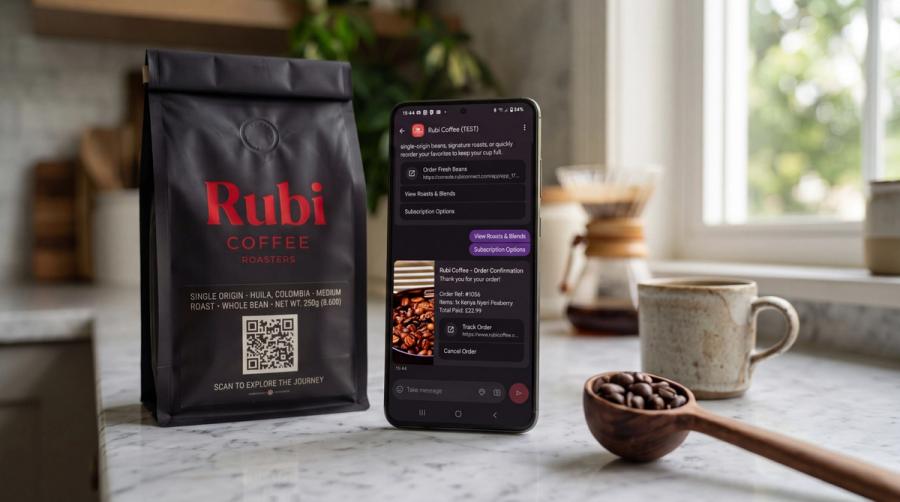
Conversational Commerce Without the Friction: The Rubi Coffee Playbook
How specialty roaster Rubi Coffee connected Shopify to WhatsApp and RCS with RubiApps to create a seamless, 24-second in-chat buying experience.
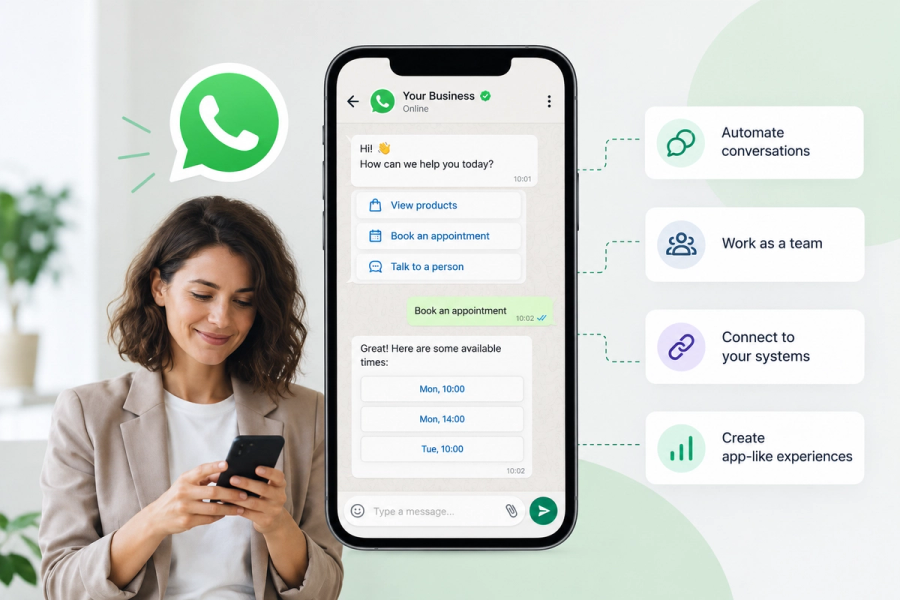
How to Get Started with WhatsApp Business in the UK: A Guide for SMEs
WhatsApp Business is easy to start with. But when your business wants to automate conversations, connect WhatsApp to its systems or create app-like customer experiences, the WhatsApp Business API opens up a whole new set of possibilities. This guide explains how to get started and what to look for in a WhatsApp Business provider in the UK.